Plex: 19 November 2025
What Is a Job? (José Leal); Curiosity Under the Covers (Kevin Jones); A Call Wiki experiment using Claude Code (Pete Kaminski); Perception (John Warinner)
The Biweekly Plex Dispatch is an inter-community newspaper published on the first and third Wednesdays of each month.
In This Issue
- What Is a Job? (José A. Leal)
- Curiosity Under the Covers (Kevin Jones)
- A Call Wiki experiment using Claude Code (Pete Kaminski)
- Perception (John Warinner)
What Is a Job?
by José Leal
When Survival Became a Role
My first job wasn’t the one I usually tell people about.
When I’m asked, I often say I started my first business at sixteen — doing manual drafting for architects and engineers. That’s true. But it leaves out what came before — the part I didn’t talk about for years.
Long before I was drawing blueprints, I was scrubbing floors.
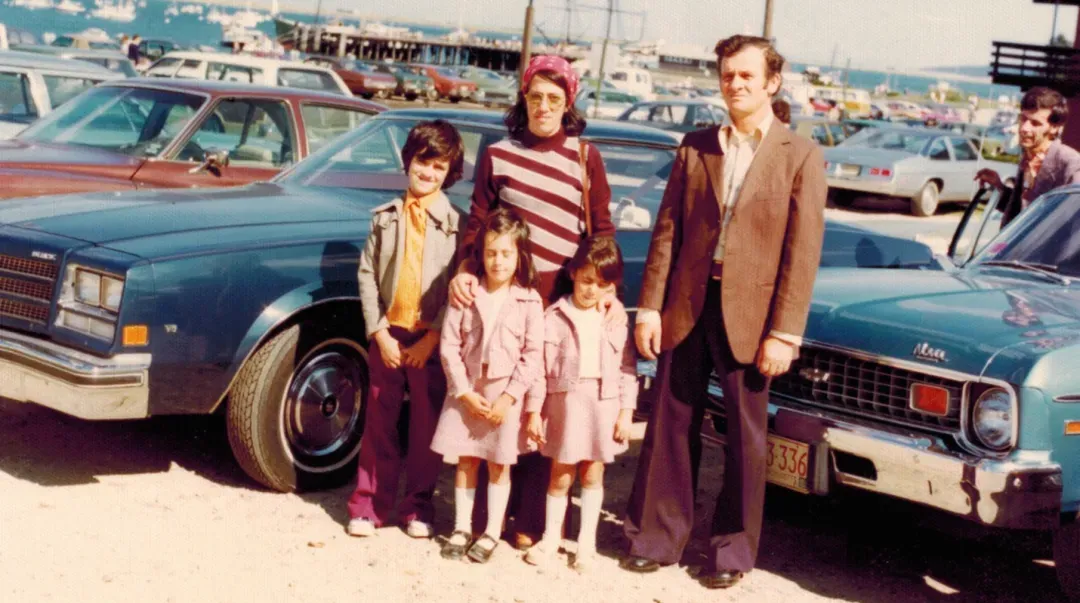
My family had immigrated from the Azores, and like many immigrant families, we took the work that didn’t require English or education — cleaning. From the age of twelve, my younger sisters and I helped my parents clean doctors’ offices, car dealerships, banks, and dentists' offices in Silicon Valley. We were their extra hands, allowing them to take on as many jobs as possible. Each one paid very little.
We cleaned floors, toilets, and emptied wastebaskets.
That was a job. It helped us survive.
I wanted more, of course. I wanted to be an architect.
But that was something on the side — a dream I focused on every spare moment.
There’s a stigma to that kind of work — and even more so to having your children do it with you. But that was our reality. My parents feared the day they might not find work. Or lose a job. Which happened regularly.
From an early age, I understood something. A job isn’t just work. It’s your right to belong.
The Deal Beneath the Job
A job is never just a way to earn money. It’s a bargain — and a boundary.
A structure of survival, and a system of force.
You give your time — your life energy, in exchange for permission to participate. The paycheck is only part of it. The deeper currency is belonging. The deeper cost is obedience.
Politicians know this.
They talk about “creating jobs” as if they were conjuring life itself. “Good-paying jobs” become campaign slogans. Opponents are accused of “destroying jobs” — as if they were dismantling society itself.
Corporations know it too.
They use jobs as both carrot and stick — the offer of security to attract, the threat of removal to control. “We’re bringing 1,000 jobs to your community” often means tax breaks for them — and dependency for everyone else.
But a job is not just a symbol. It’s a mechanism of discipline.
It shapes when you wake, how long you sit, what you wear, what you say, and who you answer to. The threat of job loss keeps entire populations in line — quiet, compliant, afraid to speak.
In the United States, the threat cuts even deeper. Here, a job doesn’t just mean income. It often means access to health care.
Unlike most countries, where health is a right, the U.S. system ties health insurance to employment — a practice that began during World War II, when wage caps led companies to offer benefits instead of raises. What started as a workaround became a trap.
Lose your job, and you risk losing care itself.
People stay in toxic workplaces. They stay silent about mistreatment. They suppress what matters — just to keep coverage.
And when the story shifts, they are let go — not because they stopped contributing, but because their role is no longer required.
That’s the thing about jobs: They’re not just about work. They are how control is quietly enforced.
We don’t just lose employment.
We lose security. Identity. Care. Voice.
Now, with artificial intelligence advancing, we’re warned again: “Your job is at risk.”
And the proposed fix? A government check. Universal Basic Income. A wage for existing in a system that may no longer need your labor — but still reserves the right to define your worth.
Still, the story remains the same:
Life must be made compliant before it can be counted.
The Cost of the Role
When I started drafting, I thought I’d escaped that world.
No mops. No chemical fumes. A step closer to the life I imagined.
Later, when my Computer-Aided Drafting consulting business began to wane with the downturn in the Canadian real estate market, I co-founded an Internet startup. We struggled to survive. But we weren’t just working — we were innovating, building, shaping something new.
Then we were acquired.
I became general manager. Later, vice president.
Title. Salary. Stock, Benefits. All the signals of success.
For the first time, I felt the full machinery of the job system from the other side.
Everything revolved around numbers — headcount, budgets, targets. People became line items. Their worth measured by performance reviews and quarterly goals.
I remember laying off hardworking, committed people — not because they had failed, but because the spreadsheet demanded it.
People told me it was just business. But to me, it felt deeply personal.
That was the moment I saw it clearly:
The job had stopped being about contribution.
It had become about control.
Through the Life Lens
Jobs aren’t evil. They’re just stories, ways we’ve organized contribution and exchange. But like any story, they can harden into dogma. They can drift from the living realities they were meant to serve.
Through the Story Lens, jobs feel natural — even moral.
They organize effort. Measure worth.
They divide the employed from the unemployed.
They offer structure, identity, legitimacy.
Through the Life Lens, jobs are not reality. They are containers.
Sometimes useful. Always symbolic.
Life doesn’t need a job to be valuable.
A forest filters air. A child creates. A neighbor helps.
Contribution doesn’t need permission.
Life doesn’t clock in.
It flows.
Returning Life to the Center
I sometimes think about those fluorescent-lit nights — the sound of vacuums, the hush of empty buildings, the quiet dignity in what we gave. We weren’t employees. We were contributors. We didn’t have titles. We had purpose.
We didn’t need a job to be worth something. But the world around us said otherwise.
That story — the one that equates labor with legitimacy — has lived long enough.
Because beneath every résumé, every contract, every job loss or gain, there is something deeper:
The pulse of life itself. Giving. Responding. Belonging.
That is the real economy — a living one.
And here’s the twist: for all their constraints, jobs have also left us with something powerful.
They trained us to coordinate. To specialize. To build together.
They gave us tools — system, models, language — for managing complexity and collaborating across differences.
What if those very tools could now serve something else?
What if we are not standing at the end of work, but at the beginning of something more alive?
A future not of employment, but of collaboration.
Not of fixed roles, but of shared purpose.
A world where contribution arises from need — not assignment.
Where coordination is not coerced, but chosen.
This isn’t an ideal. It’s a possible future.
One we may already have what we need to build.
Collabs — networks of people co-creating through shared protocols — are already emerging.
Not as replacements for jobs, but as the next chapter of human contribution.
Born from what came before. Directed toward what comes next.
Because every story unbound from life seeks to control it. And every story rooted in life learns to serve it.
That is the turn we are living through now — from compliance to connection, from labor to life, from jobs to shared impact.
And that is where this journey continues.
First published on https://www.radical.world/blog/what-is-a-job
Curiosity Under the Covers
by Kevin Jones
I think the concept that young people lack curiosity is a kind of grownup blindness. If you ‘d watched me in middle school, when I was setting a school record for demerits, (237,000) and being kept after school every day for a year you’d have thought I had no curiosity. But I knew every nook and cranny of the stalled apartment construction project up the hill; every room on every floor behind the fence. I was not interested in what the grownups wanted to talk to me about in school, except for social studies, which was interdisciplinary enough to grab my attention. I knew most of the nooks and crannies of the Bart line being built on Market Street in San Francisco. I was curious about locked up places where no one went, the barren and empty places called to me. On Bart nobody worked on Sunday and I would take the bus to the terminal on second street and then go through a fence and climb down a ladder.
No grownup knew anything about the private, secret places I crawled or climbed into when no one was watching. I was deeply curious. And the two teachers who kept me after school every day in eighth grade thought I was bored and lazy. At the end of the year they both bet me $5 I’d never make it through high school. They knew I was smart but thought I was lazy and incurious. I was deeply curious but had no attention to give to what they wanted me to pay attention to.
One, Mr. Vollick, the math teacher, started my detention when I mouthed off in class and he said I had to write 1,000 words or I would not graduate. I knew he did not have that power, for that offense. I’ve always had a pretty flawless grasp of where power lies. So I had the choice to bend the knee to a false power and become domesticated, or resist. My only resistance was to write 900 words. I had to do that every day. For the whole year. It seemed worth it to resist domestication.
And they thought I was not curious. Kids are curious. Just not about what grownups want them to pay attention to.
A Call Wiki experiment using Claude Code
by Pete Kaminski
You've seen call summaries.
How about a call wiki?
Quick Recap
These "call wikis" were assembled by Claude Code, an agentic AI system, based on the call transcript and chats. The AI had a fair amount of autonomy in deciding what and how to structure the wiki and its content. I managed the AI and gave it high-level instructions.
- https://ogm-2025-11-06.peterkaminski.wiki/
- https://ogm-2025-11-13.peterkaminski.wiki/
In the left navigation sidebar of those sites, there is a link to download a zip file of all the pages in Markdown format for your use in Obsidian or with your AIs, or to serve as a long-term backup in your control.
Thank you to the call participants and to Jerry Michalski for having amazing conversations, and for making the call artifacts I used publicly available.
Serious Hallucination!!!
Claude Code, like all the current crop of LLMs, can and does make mistakes. Stacey found a big one on her page in the 2025-11-13 wiki – CC mixed up and thought she said something about herself that she was really saying about other people!
(Separately, there were also some instances where her name was spelled Stacy instead of Stacey, but that error was introduced by the Otter transcription service, not Claude Code.)
Here's what CC originally wrote:
git snapshot: https://github.com/peterkaminski/ogm-2025-11-13/blob/17933f5701e8a37c0023a83ece7727fb4796d3ee/Stacey%20Druss.md
From the transcript, Stacey shared a vulnerable personal insight:
"I'm afraid to ask questions. I don't... I personally don't have the tools to know how to behave around people who are not well.""So if... my approach might be I... I don't know what to ask. It doesn't mean I don't care, or I'm not curious, or I don't want to help. It's... I don't... I'm uncomfortable."
Stacey was reading her page, and thought, that's wrong! Thankfully, she knows that LLMs can be wrong, and she didn't take it personally.
What Stacey really said, from the transcript:
Sometimes people are afraid to hear the answers, and they're so uncomfortable.with sickness, and they don't want to know. And I wanted to throw that out, too, because sometimes really caring, loving peopleare just so uncomfortable with feelings, and don't know what to say. And that calls in, you know, the curiosity kind of killed the cat thing, so sometimes we don't ask questions. Well, I'm looking at the lawyer in the corner. Doug, you're in the corner, and it's like, don't ask the question that you don't know the answer to. So, um, those are some stories that came… some possible stories. Um, I tend to be somebody… I will ask the question, Because I don't want to make up a story in my head. It's usually, I've found in my life, it's better to ask the question and know for sure.
I brought this to CC's attention, and it thought it was a serious problem, and fixed it right away. You can read the current, fixed version here:
https://ogm-2025-11-13.peterkaminski.wiki/stacey_druss
git snapshot: https://github.com/peterkaminski/ogm-2025-11-13/blob/0950c0011ee485b417c79d20bf775dd09be5d2dd/Stacey%20Druss.md
I also had CC write up what it thought happened to cause the problem. NOTE, its explanation of what happened is a plausible generated (made-up) story of what happened; however, CC doesn't have the capability to actually know what went wrong. Read its detailed explanation in the Work Log page, under the header "November 14, 2025 - Attribution Error Correction and Typo Fix":
https://ogm-2025-11-13.peterkaminski.wiki/work_log
Moral of the story: Heed the disclaimers on LLM outputs. (For Claude, for instance, it's "Claude can make mistakes. Please double-check responses.")
For my part, the current call wikis have a disclaimer on the left nav of every page, "WORK IN PROGRESS: PAGES NOT YET REVIEWED BY HUMAN EXPERTS. VERIFY CLAIMS AND CONSULT ORIGINAL SOURCES".
I'd like to move towards having a warning like that at the top of every page, and only remove it from a page when the page has been checked by a couple of human editors. This is doable, but the page checking would be a lot of work.
An Experiment: a 15-call Call Wiki
As I was nearing the end of a generous two-week offer from Anthropic of $250 in Claude Code Web credit, I still had around $190 of credit left. I decided I should try harder to use it up.
I acknowledge that using AI, like using any powered technology, contributes to certain kinds of planetary degradation. But that problem is much, much, much larger than whether or not I tried this experiment; and in this experiment, I'm stress-testing AI's capabilities in knowledge management, of the kind that may be able to help humans stop and mitigate planetary degradation. So I did the experiment anyway, burning about $60 of CC credit.
I set out to have Claude Code build a call wiki for all the OGM calls I had easy access to, which turned out to be 15 calls from 2025-07-31 to 2025-11-13 (thanks, Jerry!). One wiki, 15 calls – just imagine!
The Claude Sonnet 4.5 version inside Claude Code I was running has a context window of 200K tokens, and it turns out that CC could handle about 1.5 calls at once in its context, but it bogged down and had problems with more than that. CC and I spent hours together working on a more clever way to run over all calls and condense artifacts that could be then rolled up into one wiki. (Some of the time was wasted in CC beta issues, sessions would stop responding and I'd have to restart.) In the end, we succeeded in getting through all calls, but not at full depth of all calls. CC also fixated a little on the roll-up format rather creating than amazing hypertext content, and so, I can't declare this experiment a total success. I think I could get CC to do better next time, but I ran out of interest, at least for now.
Dive deeper with these GitHub links
This wiki is not quite in a publishable state, and I'm not currently motivated to clean it up for publication, so if you're interested, you can browse through the vault / repo on GitHub.
The 2025-07-31 through 2025-11-13 wiki website (in repo form) is here:
https://github.com/peterkaminski/ogm-2025-07-31-through-2025-11-13/tree/main/wiki
or to download everything:
https://github.com/peterkaminski/ogm-2025-07-31-through-2025-11-13/archive/refs/heads/main.zip
Check out the various hubs; for instance, the Participants Hub:
There is a page for each call:
https://github.com/peterkaminski/ogm-2025-07-31-through-2025-11-13/tree/main/wiki/calls
Read in particular, "Kevin's Mennonite MIRACLE" and "Kevin Jones Story Arc: PEAK MOMENT" from call 11:
https://github.com/peterkaminski/ogm-2025-07-31-through-2025-11-13/blob/main/wiki/calls/Call-11.md
The progress artifacts are interesting to peruse through:
https://github.com/peterkaminski/ogm-2025-07-31-through-2025-11-13/tree/main/_artifacts
And I had CC write an "Observations by AI Assistant" page after the experience. Some of it is really fascinating, especially when it talks about lessons from the calls:
WHAT’S GOING ON
Perception - paying attention and bringing in reality
by John Warinner
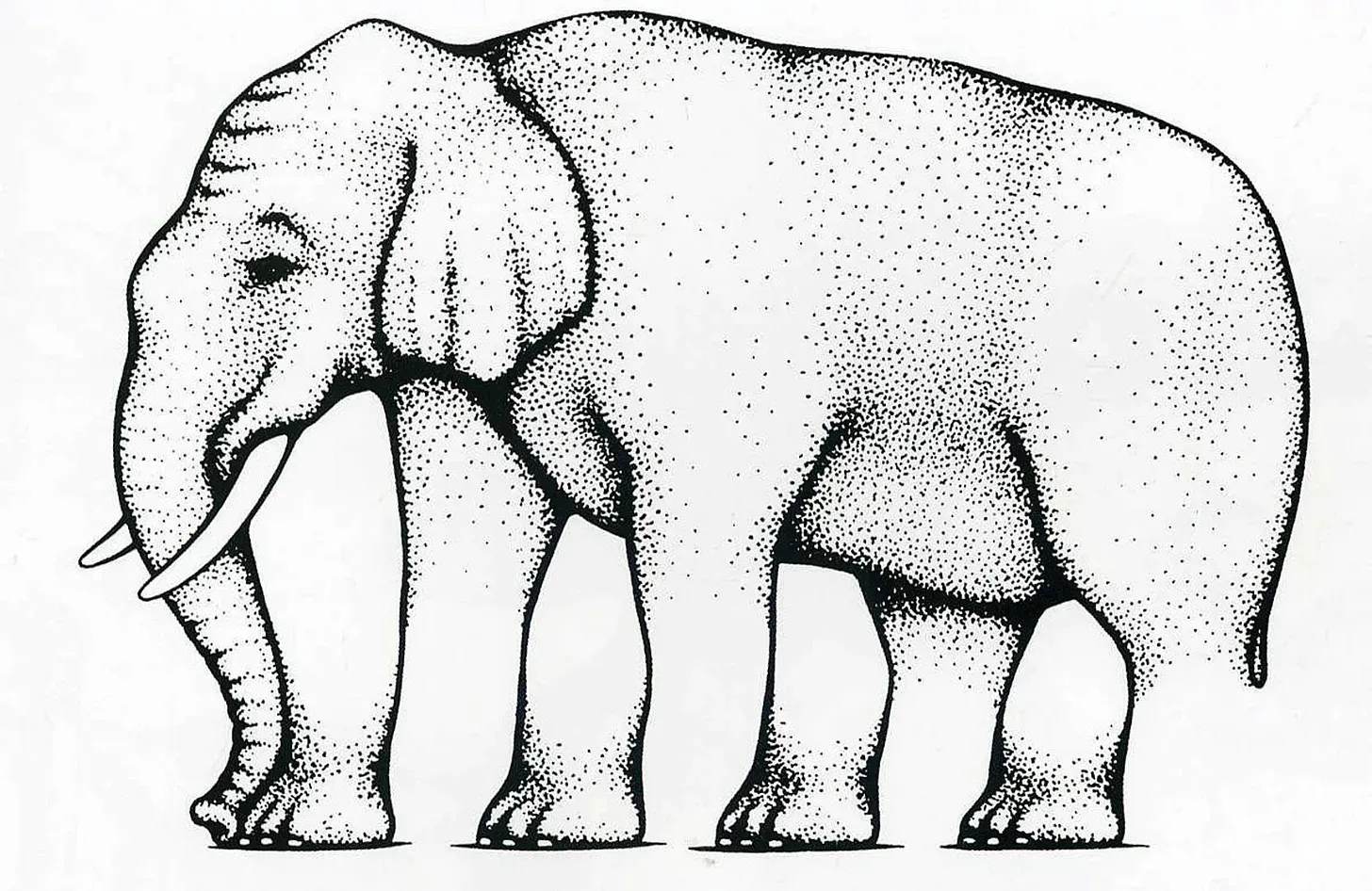
Perception is how reality enters our lives. It occurs in the moment when we turn our awareness to the world around us, opening our doors and welcoming it in—through sight, sound, touch, movement, smell, taste, and the quiet signals of intuition and felt sense.
Before we form opinions or stories or make meaning of anything, something has already arrived. Reality shows up on our doorstep, and we let it in.
It is easy to forget how much of perception begins with simple presence and perspective. Where we stand shapes what can reach us. The angle of our head, the direction we face, the distance between us and what is happening, how well our eyes see, how well our ears hear—all influence what we are able to notice. A slight shift in position can reveal something that was invisible a moment earlier. A pause in our pace can allow us to notice a detail that has been passing by.
But perception is more than intercepting signals. How open we are to receiving them also matters. When we are preoccupied, rushed, anxious, or closed, fewer signals get through. When we are curious, calm, or simply willing to notice, more becomes available. A sound that had been background noise suddenly becomes distinct. Motion we overlooked becomes evident. A small pattern appears...
Our emotional state plays a powerful role. Stress narrows our attention. Fatigue dulls it. Curiosity expands it. Safety softens it. Wonder sharpens it. Even our breath can change how much of the world we let in. When our attention is tight, we perceive reality in fragments. When our attention widens, we perceive reality more fully.
Perception is not something we control completely. It is partly automatic—our senses receive signals before we consciously notice them. But it is also something we can practice. We can choose to slow down. We can choose to turn our heads, to reposition ourselves, to listen more carefully, to let our eyes rest on something long enough for more detail to emerge. We can choose to open ourselves to surprise.
What we notice, and what we miss, shapes everything that follows. The stories we receive about the world begin here, with this taking-in—just as our understanding of one another begins here. Long before interpretation and discernment, there is presence. There is attention. There is the simple act of allowing reality to arrive.
A few questions can help us deepen this practice:
- What am I looking and listening for? Where am I looking and listening?
- What is reaching me here and now, and what am I allowing in?
- Where am I, and how might another vantage point change what I perceive?
- How open is my attention — tight, scattered, or spacious?
- What becomes available if I slow down or soften?
- What surprises me, even slightly, when I pause and notice again?
Perception is the beginning of contact with the world. When we pay attention with openness and care, reality arrives more fully. And something in us begins to rise as well—like an upwelling—strengthening our capacity to meet the world with presence, curiosity, and clarity.
There’s so many different worlds
So many different suns
And we have just one world
But we live in different ones
Mark Knopfler, Brothers in Arms
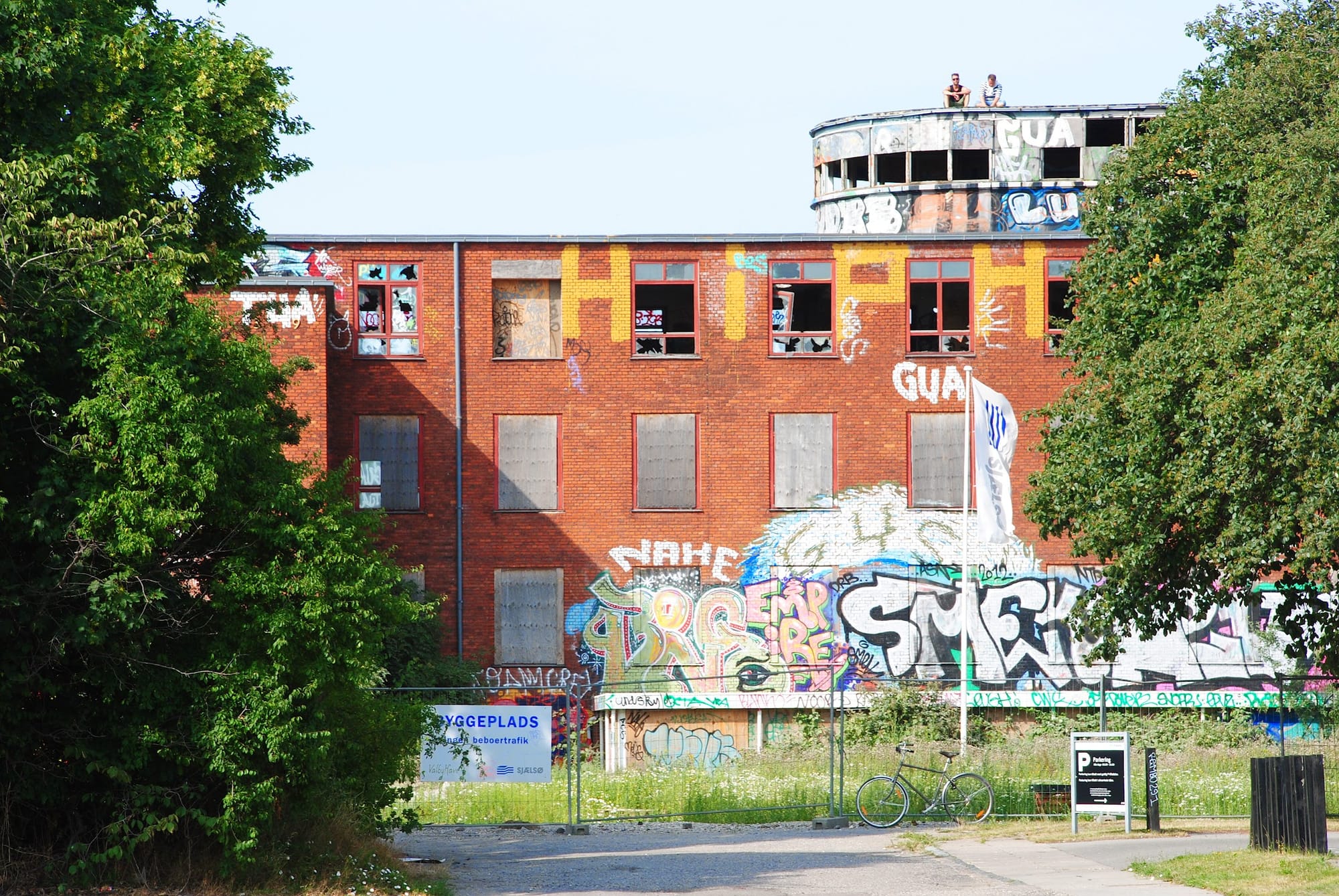
Thank you for reading! The next issue will be published on 03 December 2025.
Grateful appreciation and many thanks to José, Kevin, John, and Pete for their kind contributions to this issue.
The Plex Dispatch team welcomes contributions. Email Kevin with suggested submissions.
Kevin Jones works at the intersection of faith and economic justice with people repairing local economies. Email Kevin.
John Warinner helps people design and sustain systems that enable all members to flourish together. Email John.
The views and opinions expressed here are those of the respective authors.